Polanco

A drill-ready copper-gold porphyry project located in Chile's prolific Tarapacá Region

The Polanco Project is a district-scale copper-gold exploration project located 23 km northeast of BHP’s Cerro Colorado Mine in Northern Chile. Covering 2,800 hectares, it hosts a large, partially concealed porphyry system identified through extensive geological, geochemical, and geophysical work. With strong technical indicators and favourable geology, Polanco represents one of the most compelling undrilled copper-gold opportunities in the region.

Summary

Polanco is located within Chile’s highly prospective Paleocene porphyry copper belt, a geological corridor that hosts several major copper deposits. Historical exploration by Teck Resources and subsequent programs identified a large hydrothermal system featuring extensive potassic alteration, copper-bearing sulphides, gold mineralization, and a significant geophysical footprint.

Recent geological interpretation indicates strong potential for a large-scale copper-gold porphyry system concealed beneath shallow volcanic cover. A first-pass drilling program is planned to test the core of this mineralized system.

Project Overview

Strategic Development

4,000 m Drill Program

2,800 Hectares

Key Highlights

Located 23 km northeast of BHP’s Cerro Colorado Mine and 115 km from the port of Iquique.

Situated within the Paleocene porphyry copper belt, one of Chile’s most productive mining regions.

Extensive hydrothermal alteration system measuring approximately 2 km × 1 km at surface.

Rock sampling returned values up to 0.84 g/t gold and 851 ppm copper.

Relict sulphide studies confirmed the presence of chalcopyrite and bornite, key indicators of porphyry copper mineralization.

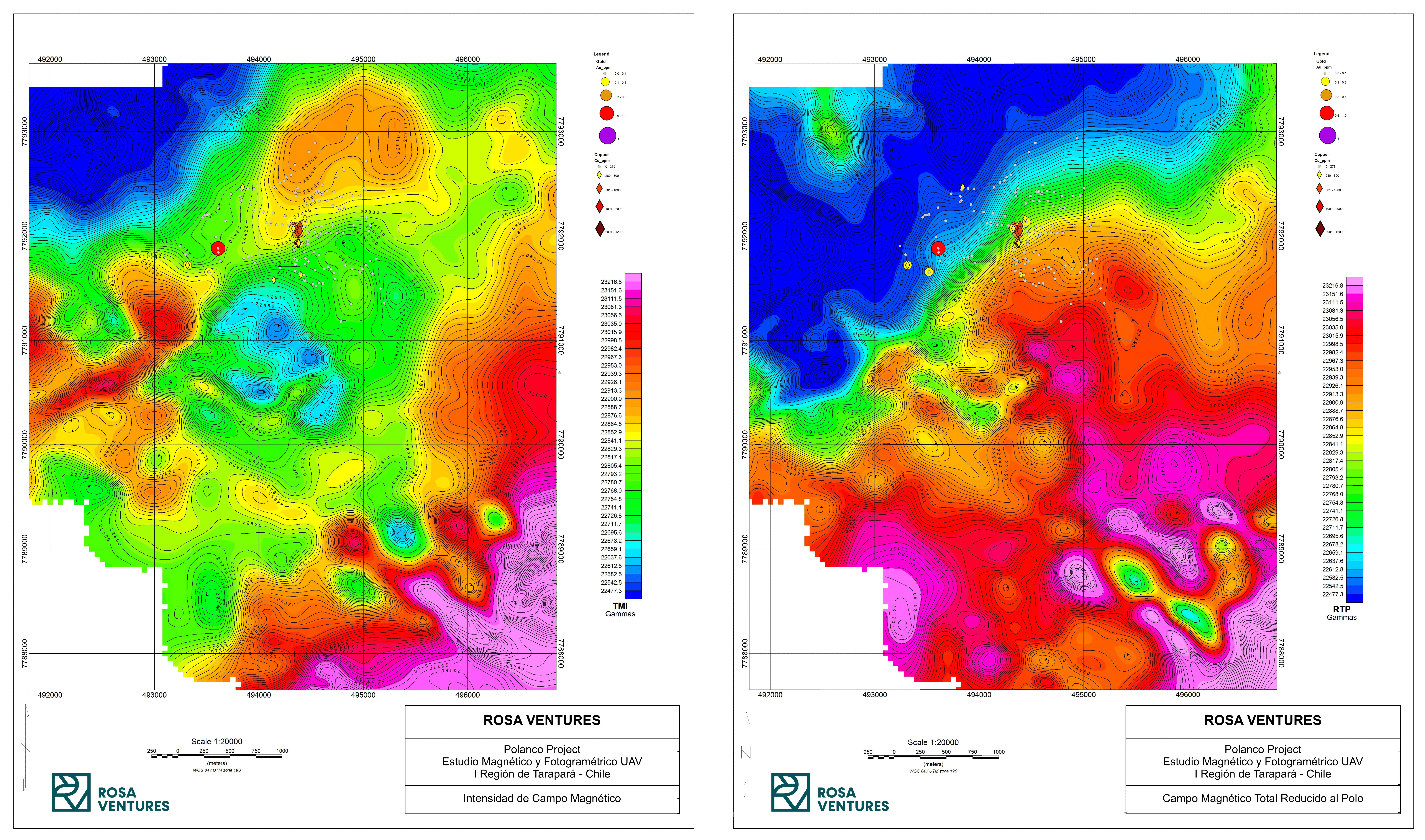
Large 2 km-diameter magnetic anomaly interpreted to represent the core of a significant porphyry system.

Geology

Polanco is centered on a large copper-gold porphyry system that formed during the Paleocene, aligning with the principal mineralizing events responsible for many of Northern Chile’s major copper deposits. The system displays classic porphyry characteristics, including extensive potassic alteration, quartz stockwork veining, hydrothermal breccias, and widespread copper-bearing sulphide mineralization. Limited outcrops of K-silicate alteration coincide with the highest gold values and represent the partially leached and oxidized portion of an inter-mineral porphyry Cu-Au system.

Age-dating confirms the Paleocene timing of the mineralization, while mineralogical studies show the system is dominated by chalcopyrite and bornite within the potassic zone. Notably, the porphyry contains low pyrite content, suggesting predominantly hypogene copper mineralization rather than a strong supergene enrichment blanket.

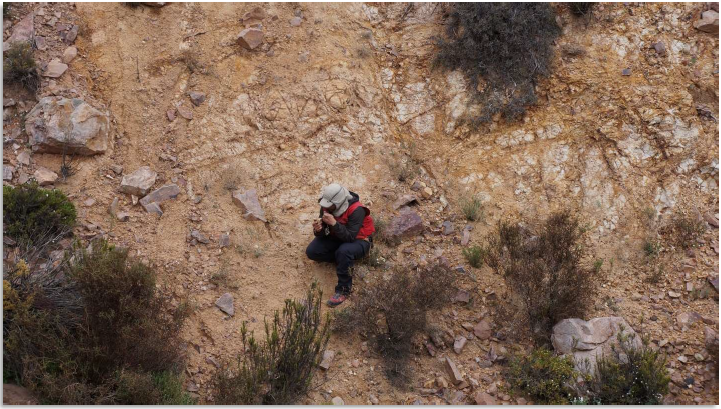
Photo 1. Strong A-quartz stockwork on the K-silicate altered dacitic porphyry. Values up to 0.8 g/t Au were obtained in these outcrops while Cu value averages 350 ppm (leached).
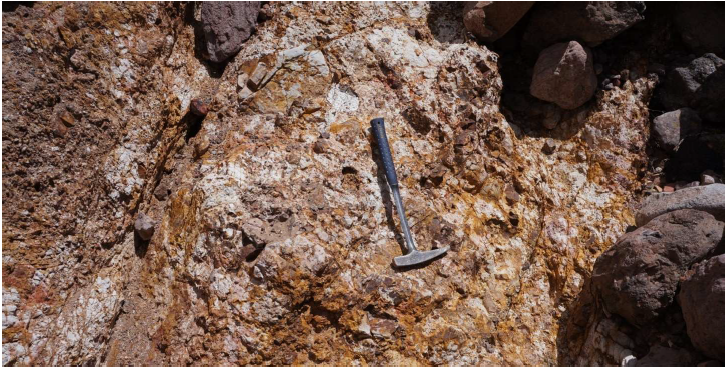
Photo 2. Strongly leached hydrothermal breccia with A-quartz stockworked porphyry clasts in a rich Fe-oxide matrix (after leached pyrite).

Exploration Target

The combination of strong alteration, favourable geochemistry, fertile magmatic signatures, and a large concealed magnetic anomaly indicates the presence of a significant porphyry copper-gold system at depth. Geological modelling suggests the project has the scale and characteristics to host a major discovery, with substantial portions of the target area remaining completely untested by drilling.

The large magnetic anomaly, associated with potassically altered early mineral porphyries and covered by post-mineral rocks, implies sufficient size to host a multi-hundred-million-tonne deposit. The project is drill-ready, with an initial drilling program designed by Rosa Ventures well-suited for the first phase of exploration. Positive results could position Polanco as a potential future copper ore source for BHP’s planned Cerro Colorado flotation plant.